Metal Binder Jetting 3D Printing
No tooling required, first article in 3-5 days, free forming of complex structures
First article in 3-5 days | No tooling required | No support structures needed | Sintered density >96% | Seamless synergy with MIM
Metal Binder Jetting 3D Printing
No tooling required, first article in 3-5 days, free forming of complex structures
First article in 3-5 days | No tooling required | No support structures needed | Sintered density >96% | Seamless synergy with MIM
What is MBJ metal binder jetting?
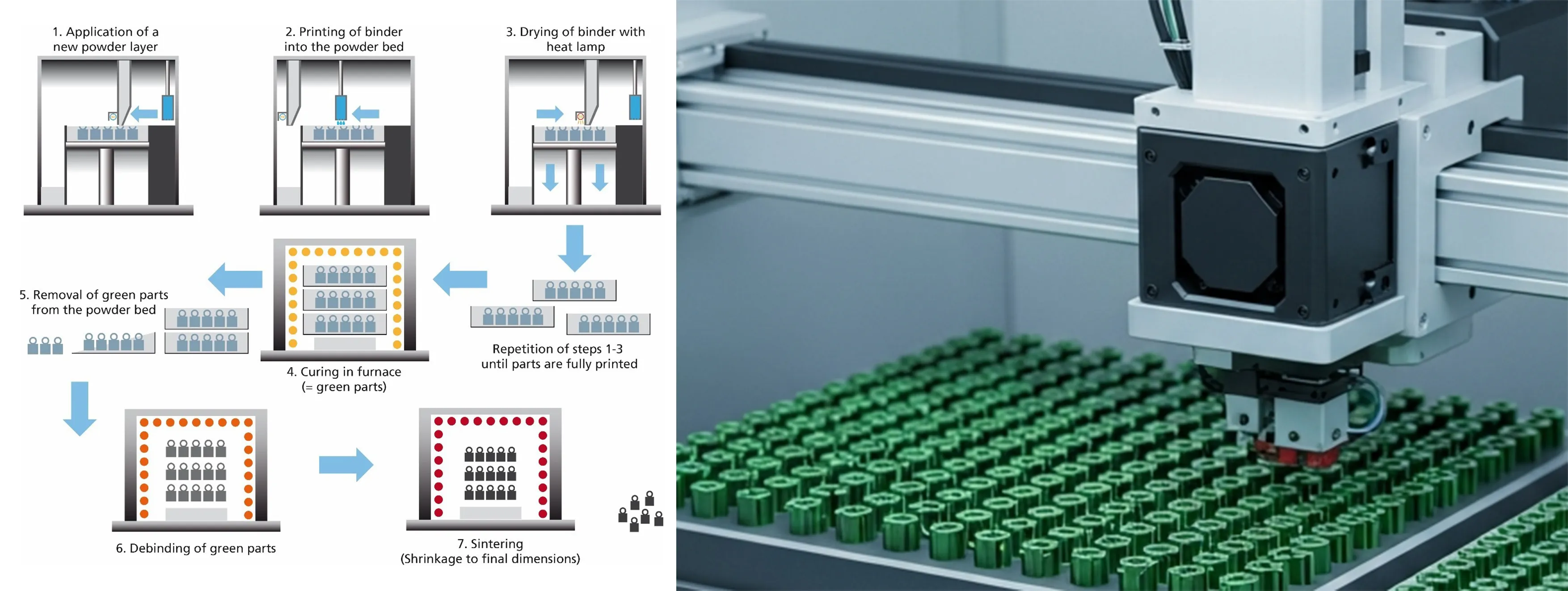
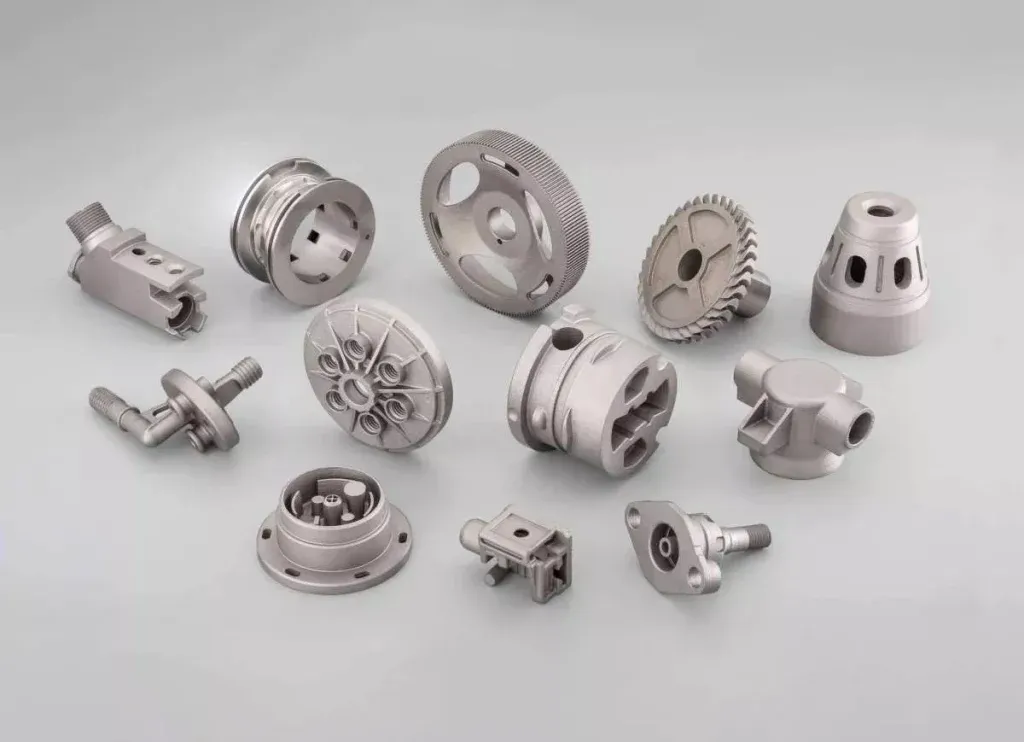
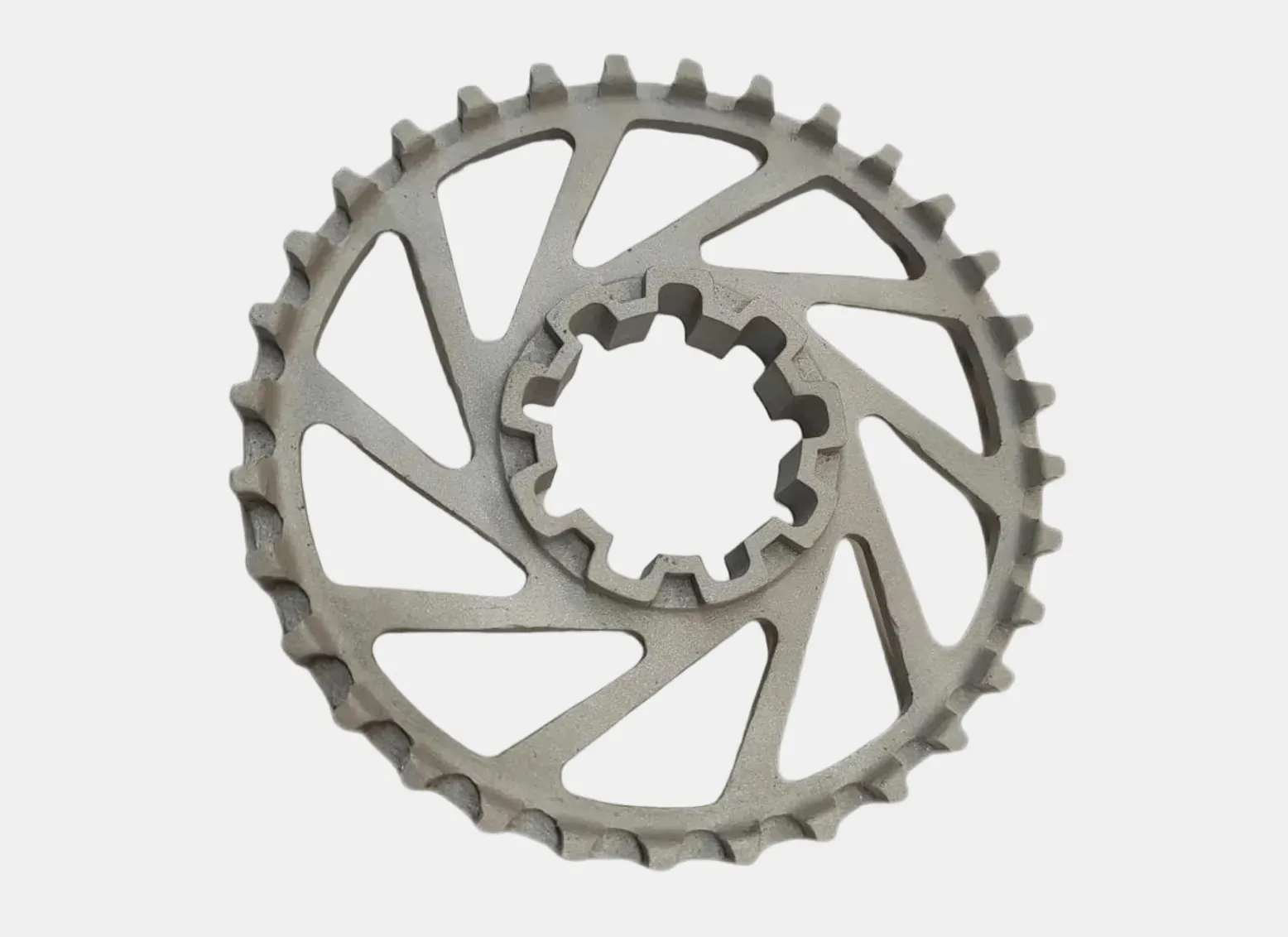
MBJ (Metal Binder Jetting) is a metal additive manufacturing technology based on the powder bed process. It uses an array of nozzles to precisely jet liquid binder onto a metal powder bed, bonding layer by layer to form a three-dimensional green part, which is then densified through debinding and high-temperature sintering to finally obtain metal parts with properties close to those of wrought materials.
Unlike SLM/DMLS, which require high-power lasers, MBJ requires no high-heat input throughout the entire process, avoiding deformation and warpage caused by thermal stress. More importantly, the debinding and sintering process route of MBJ is completely consistent with that of MIM, meaning that after MBJ prototyping is validated, the data can be directly used for MIM mass production, zero-risk transition with no need to change suppliers.
Core Differences Between MBJ and SLM/DMLS Laser Printing
| Comparison Dimension | MBJ Binder Jetting | SLM/DMLS Laser Melting |
|---|---|---|
| Forming Principle | Nozzle jets binder + sintering | Laser point-by-point melting of metal powder |
| Printing Speed | ✅ 3-5 times faster (entire layer jetted at once) | ⚠️ Slower (point-by-point scanning) |
| Support Structure | ✅ No support needed (powder naturally supports) | ❌ Support structure must be added |
| Equipment Cost | ✅ $100,000-400,000 | ❌ $500,000-2,000,000 |
| Material Cost | ✅ MIM-grade powder, cost 1/3-1/2 of SLM | ❌ Requires special spherical powder |
| Powder Recovery | ✅ Recovery rate of unbound powder >95% | ⚠️ Powder affected by heat, lower recovery rate |
| Thermal Stress Deformation | ✅ No thermal stress, dimensionally stable | ❌ Requires stress relief heat treatment |
| Surface Roughness | Ra 6-12μm (can be polished to <0.8μm) | Ra 3-8μm |
| Batch Adaptability | ✅ Optimal for small to medium batches (1-5,000 pieces) | ⚠️ Small batches (1-100 pieces) |
MBJ 8 Core Advantages
MBJ has obvious advantages in rapid prototyping, small-batch production, and complex structure manufacturing, and is the best complementary solution among traditional CNC, MIM, and SLM.
Complete MBJ Process Flow — 6 Steps to Produce Metal Parts
The MBJ process flow is highly similar to MIM, requiring only 6 steps from printing to finished parts. We have a full-process in-house equipment chain from powder preparation to finished part inspection, ensuring precise control at every process node.
1. Data preparation and powder spreading
Process 3D model slicing, set layer thickness (50-100μm) and binder saturation (50-70%). The precision powder spreading system evenly spreads metal powder with a spreading accuracy of ±0.01mm.
2. Binder jetting forming
The array nozzle selectively jets binder according to the slice data, with a resolution of up to 1200 DPI. The entire layer is jetted at once, far faster than laser point-by-point scanning.
3. Layer-by-layer building and curing
Cycle of layer-by-layer powder spreading → jetting → descending until the entire part is completed. After printing, curing treatment at about 200°C strengthens the green part, and unbound powder is recycled.
4. Debinding
Heat to 400-600°C to remove the binder, forming a “brown part”. Uses the same debinding equipment and process parameters as MIM.
5. High-temperature sintering
Sinter at 1100-1400°C under vacuum or protective atmosphere, causing metal particles to fuse and densify. Linear shrinkage 15-20% (can be precisely compensated), density reaches over 96%.
6. Post-processing and quality inspection
Heat treatment, polishing, sandblasting, PVD and other surface treatments + Zeiss CMM full-dimension inspection + mechanical property testing, accompanied by a complete inspection report.
Common Pain Points in the MBJ Industry — How We Solve Each One
In rapid prototyping and small-batch manufacturing of metal parts, engineers and procurement often face the following challenges. We have established systematic solutions for each pain point, making MBJ a truly reliable production tool.
🔴 Prototyping cycle too long, project progress blocked
Traditional tooling development takes 4-8 weeks, CNC programming + fixture preparation takes 1-2 weeks, product teams have to wait. Design validation is delayed, market windows are missed, and competitors may launch first.
✅ MBJ requires no tooling, first article in 3-5 days.After drawing confirmation, print directly to validate design feasibility at the fastest speed. Parallel prototyping for multiple solutions, testing multiple design variants simultaneously to accelerate iteration cycles.Shortens the traditional process by more than 80%.
🔴 High tooling cost, not cost-effective for small batches
MIM tooling costs $10,000-$50,000, CNC programming + fixture costs also thousands of dollars. When demand is only 100-500 pieces, the unit cost after tooling amortization rises sharply, making project ROI difficult to guarantee.
✅ MBJ has zero tooling cost, single pieces can be produced.No upfront investment threshold, unit cost significantly lower than tooling-based solutions in the range of 1-1000 pieces. Produce on demand, flexibly respond to market changes. Compared to MIM tooling, small-batch costs can be reduced by 50-70%.
🔴 Complex structures cannot be demolded / cannot be machined
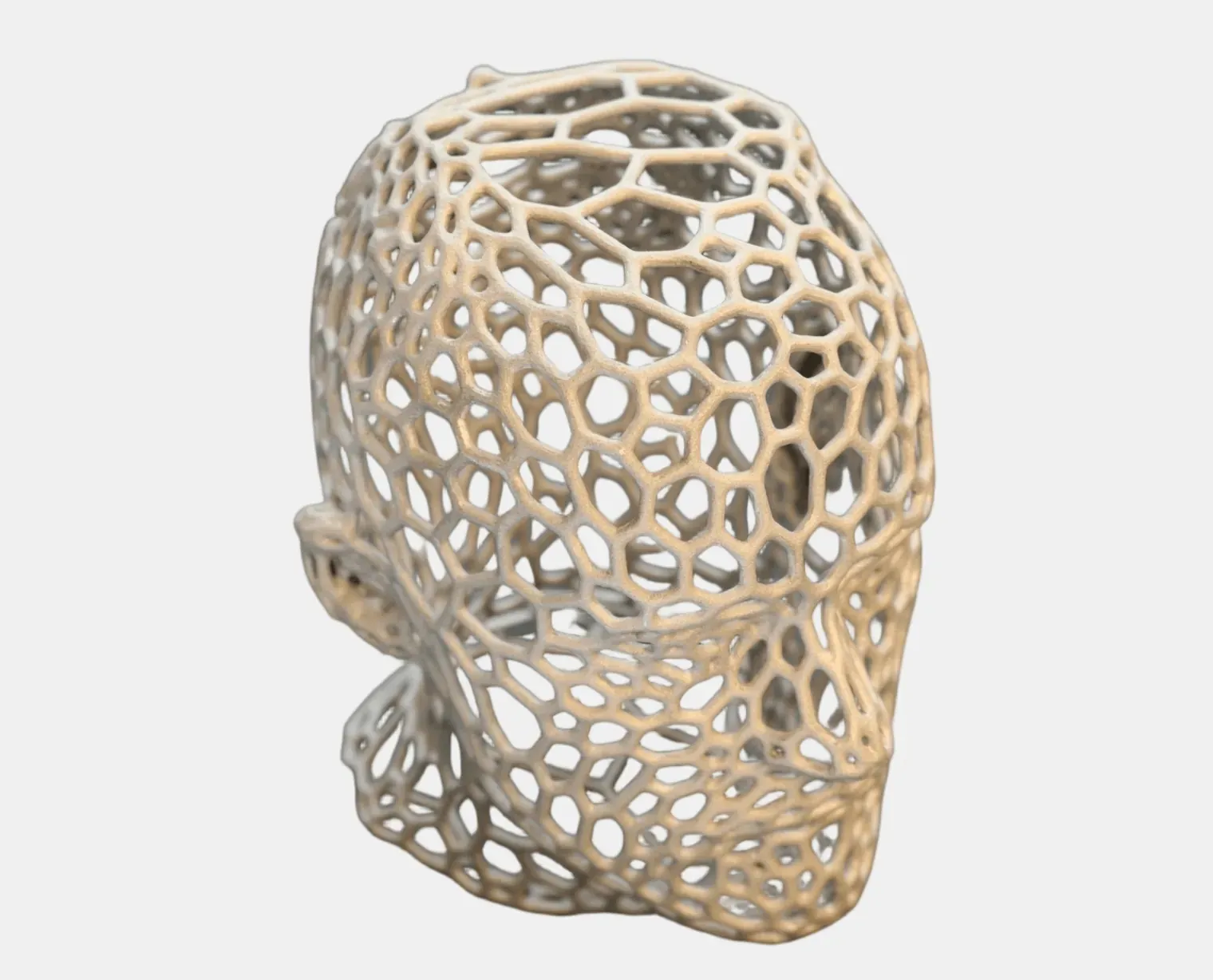
Internal intersecting channels, conformal cooling channels, lattice lightweight structures, undercut structures — these designs cannot be realized in traditional MIM or CNC due to parting line limitations and tool accessibility issues.
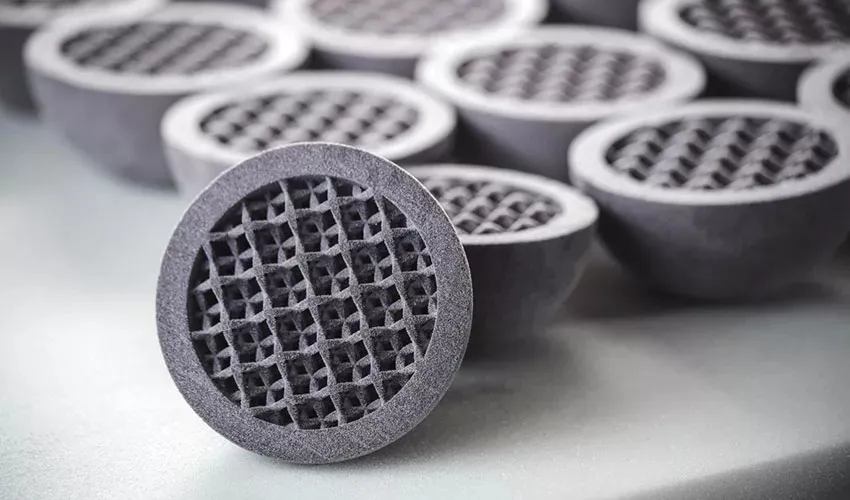
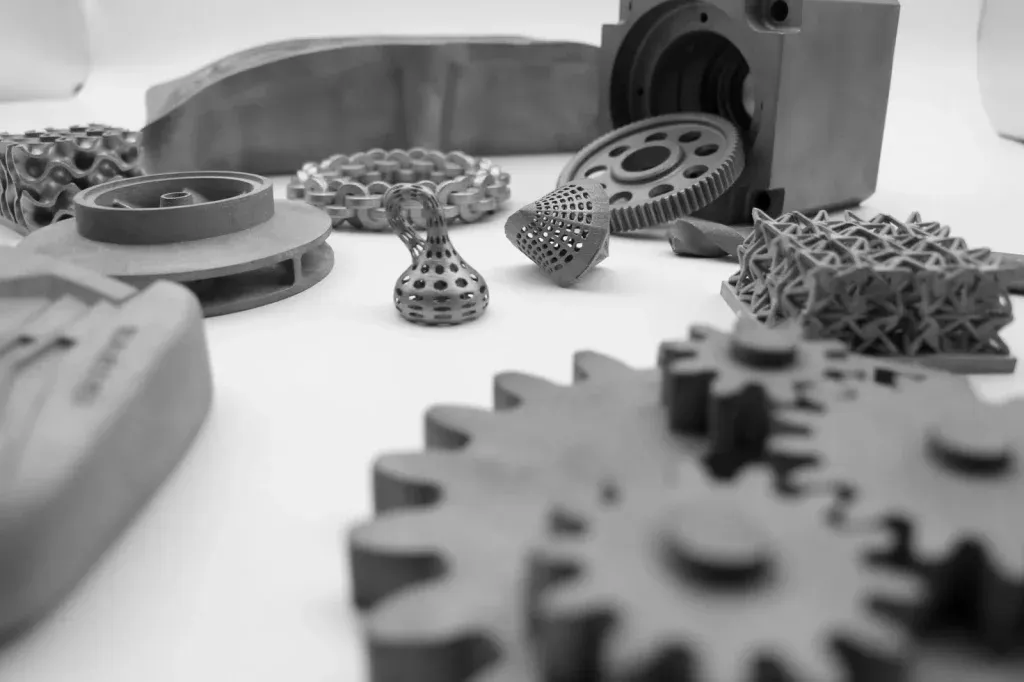
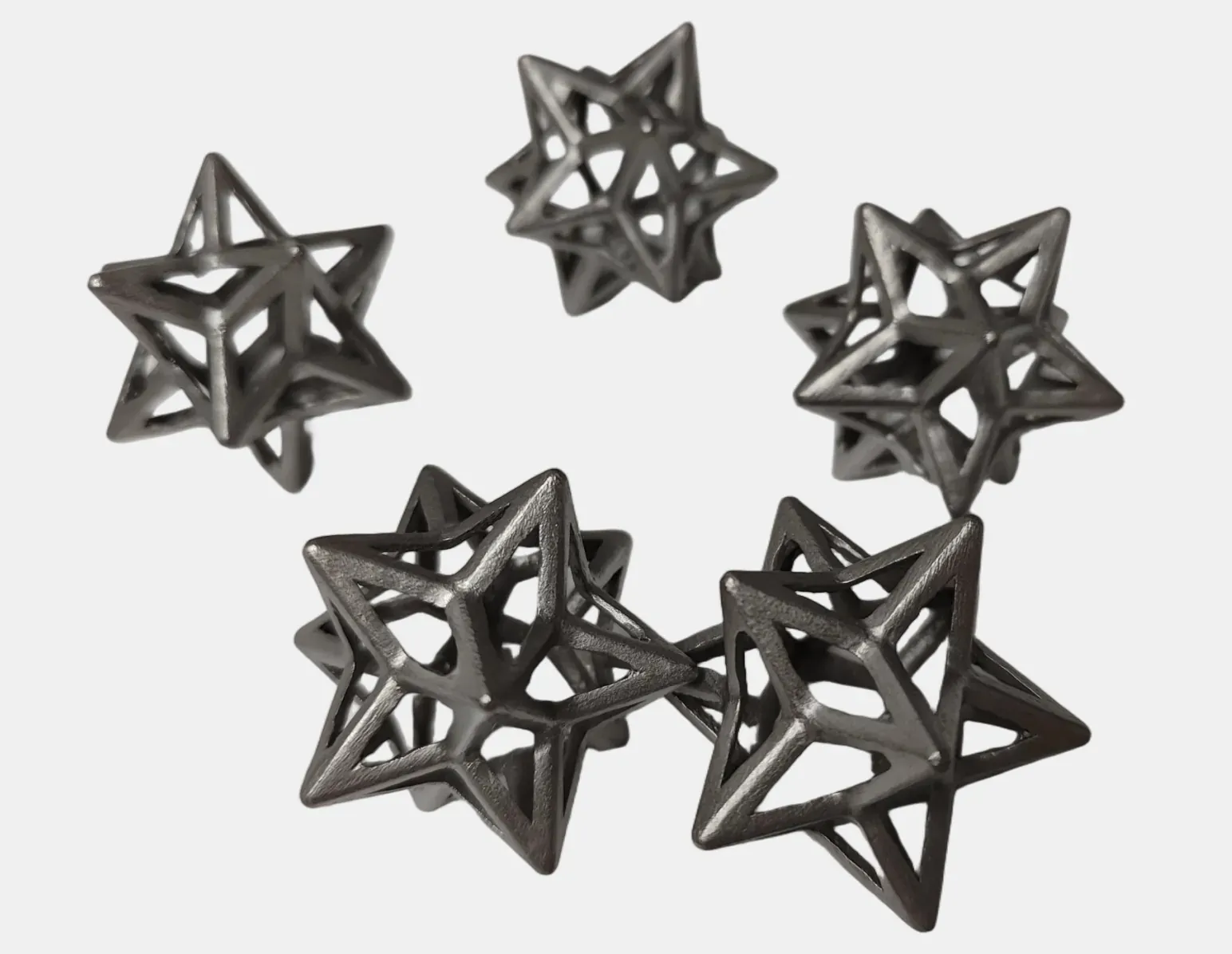
✅ The MBJ powder bed process has no parting line restrictions and no need to consider tool accessibility. Internal channels, conformal cooling channels, topologically optimized lattices — any complex structure can be integrally formed. Truly achieving “what you design is what you get”, unleashing engineers' creativity.
🔴 Disconnection between prototyping and mass production processes
Traditional path: 3D printing service provider prototypes → internal evaluation → find an MIM supplier for tooling and mass production. Process switching leads to parameter re-debugging, data loss, increased communication costs and risks.
✅ MBJ+MIM same supplier, sharing the debinding and sintering process chain.MBJ validation data directly guides MIM tooling design and sintering parameter setting.Zero parameter switching from prototyping to mass production, zero-risk transition, seamless connection.No need to change suppliers, reducing communication costs by 80%.
🔴 Sintering deformation difficult to predict, dimensional deviation
Both MBJ and MIM involve 15-20% linear shrinkage, and the non-uniform shrinkage of complex geometries leads to warpage. The traditional trial-and-error method requires multiple rounds of printing-sintering-measurement cycles, which is time-consuming and labor-intensive.
✅ Introduce sintering simulation software to predict deformation, combined with the extensive shrinkage database accumulated from MIM.Precisely compensate shrinkage based on part geometry and material characteristics. First-part yield >95%,greatly reducing the number of trial sintering rounds and development cycles.
🔴 Surface roughness does not meet appearance requirements
After sintering, MBJ parts have a surface roughness of Ra 6-12μm, which is not ideal for appearance parts and sealing surfaces. Many users are unaware of post-processing solutions and think MBJ can only be used for functional parts.
✅ One-stop post-processing: polishing to Ra <0.8μm, PVD coating, electroplating, sandblasting, passivation.From printing to finished product, everything is completed in-house. Appearance parts and sealing surfaces can all meet requirements.After polishing, 316L achieves a mirror finish that meets consumer electronics appearance standards.
Common MBJ Materials — Full coverage of stainless steel, titanium alloy and tool steel
We support a wide range of MBJ metal materials. All powders undergo100% spectral analysisto verify composition and comply with RoHS and REACH environmental regulations. The powders used in MBJ are the same as those used in MIM, ensuring material performance consistency from prototyping to mass production. Unsure about material selection? Our engineers can provide free recommendations.
| Material | Density(g/cm³) | Tensile Strength(MPa) | Elongation | Key Characteristics | Typical Applications |
|---|---|---|---|---|---|
| 316L stainless steel | 7.9 | 450-550 | 40-50% | Corrosion resistance, biocompatibility, non-magnetic | Medical devices, food equipment, chemical parts |
| 304L stainless steel | 7.9 | 450-520 | 40-50% | General purpose, low cost, good weldability | Consumer electronics, home appliances, general parts |
| 17-4PH stainless steel | 7.8 | 900-1310 | 5-15% | High strength, heat treatable to H900 | Gears, valve bodies, aerospace structural parts |
| 420 stainless steel | 7.7 | 700-1000 | 3-8% | High hardness, wear resistance | Cutting tools, mold inserts, surgical instruments |
| Ti-6Al-4V titanium alloy | 4.43 | 900-1050 | 8-12% | Lightweight, biocompatible, high strength | Medical implants, aerospace parts, high-end wearables |
| Fe-50Ni soft magnetic alloy | 8.2 | 420-480 | 25-35% | High permeability, low coercivity | Sensor cores, electromagnets, relays |
| Inconel 718 superalloy | 8.2 | 980-1240 | 10-20% | High temperature resistance >700°C, oxidation resistance | Turbochargers, aero-engines |
| Copper alloy | 8.8 | 180-250 | 15-30% | Excellent electrical and thermal conductivity | Heat sinks, conductive terminals, thermal management |
MBJ Process Capability Parameters — Transparent Data for Accurate Decision Making
We provide clear MBJ process capability parameters to help you make accurate judgments during the design phase. The following data is based on actual production validation using Desktop Metal Shop System and ExOne Innovent+ equipment.
Forming Capabilities
250×250×250
Maximum build size (mm)
50-100
Layer thickness (μm)
0.5
Minimum wall thickness (mm)
0.5
Minimum hole diameter (mm)
±0.2
Dimensional accuracy (mm)
1200
Print resolution (DPI)
Mechanical Properties Reference (316L as-sintered)
>96%
Sintered density
450-550
Tensile strength (MPa)
170-220
Yield strength (MPa)
40-50%
Elongation
67 HRB
Hardness
Ra 6-12
Surface roughness (μm)
Multiple Equipment Covering Different Size Requirements
| Equipment | Build size (mm) | Layer thickness (μm) | Positioning |
|---|---|---|---|
| Desktop Metal Shop System | 250×250×250 | 50-100 | Mainstream for small to medium batches, 316L/17-4PH/304L |
| ExOne Innovent+ | 160×65×65 | 30-100 | High-precision micro parts, medical/electronics prototyping |
| HP Metal Jet S100 | 430×320×200 | 50-100 | Industrial-scale batch capacity, thousands of pieces per batch |
MBJ + MIM Synergy — Seamless Transition from Prototyping to Mass Production
MBJ and MIM are a perfect match:they share the exact same debinding and sintering process route. MBJ rapidly validates designs (no tooling, 3-5 days), and after validation, the data is directly used for MIM tooling development and mass production. The same supplier, the same quality system, the same set of sintering parameters——zero-risk transition, optimal time, optimal cost.
MBJ vs MIM — Choose the optimal process based on your needs
| Requirement scenario | Choose MBJ | Choose MIM | Suggestion |
|---|---|---|---|
| Design validation, functional testing | ✅ 3-5 days to produce parts | ⚠️ Need to wait for tooling 4-8 weeks | Use MBJ for validation first, then open MIM tooling after confirmation |
| Small batch (<1,000 pieces) | ✅ No tooling cost advantage | ❌ High tooling amortization cost | MBJ direct delivery, or MIM long-term planning |
| Medium batch (1,000-5,000 pieces) | ⚠️ Acceptable | ✅ Tooling begins to amortize | Compare total cost; usually MIM starts to have an advantage |
| High volume (5,000-100,000+ pieces) | ❌ High unit cost | ✅ Unit cost 50-70% lower | MIM is the optimal choice; MBJ only as a supplement |
| Complex internal structures | ✅ Free forming | ⚠️ Parting line limitation | MBJ preferred, or MIM + post-processing |
| Urgent needs | ✅ 3-5 days | ⚠️ Need tooling preparation | MBJ for emergency, then transfer to MIM mass production |
How different roles leverage MBJ+MIM synergy
🔬 R&D Engineer
Focus: prototyping speed, design iteration efficiency. In the new product development stage, multiple design solutions need to be validated quickly. MBJ produces first articles in 3-5 days, supports parallel printing of multiple solutions, and quickly finds the optimal design.
Recommended path: 3D drawing → MBJ 3-5 day prototyping → Design validation → MIM tooling → mass production
💼 Purchasing Manager
Focus: cost control, supply chain simplification. Early-stage MBJ prototyping has zero tooling investment, and after volume production, MIM unit cost is 50-70% lower than CNC. The same supplier covers the entire process, reducing management costs.
Recommended path: Demand analysis → MBJ validation + tiered pricing → MIM mass production long-term agreement
🚀 Entrepreneur / Hardware Team
Focus: flexible start, reducing upfront investment risk. MBJ requires no tooling investment, enabling flexible small-batch production. After successful market validation, seamlessly switch to MIM mass production and scale capacity as needed.
Recommended path: Small-batch MBJ trial production → Market validation → Switch to MIM high volume after volume increases
Application Scenarios and Industries Suitable for MBJ
Leveraging the characteristics of no tooling required, fast delivery, and free forming of complex structures, MBJ plays an irreplaceable role indesign validation, small-batch production, and complex structure manufacturingacross multiple industries.
📱 Consumer Electronics
APrototyping for new products such as hinges, card trays, buttons, etc.
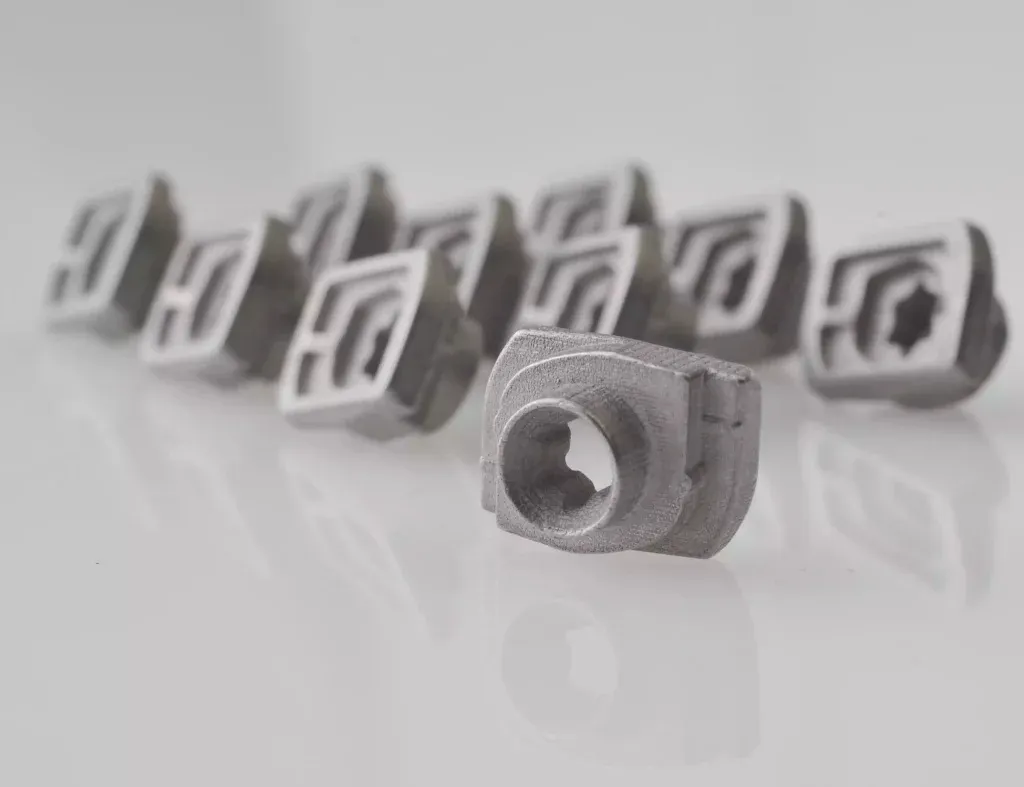
Foldable hinge validation, SIM card trays, side keys, camera decorative parts, etc. MBJ quickly produces parts to validate assembly and feel, then transfers to MIM mass production after confirmation.
Typical lead time: 3-5 days | Material: 316L/17-4PH
🏥 Medical Devices
Surgical instruments, implant prototype validation
Surgical forceps handles, endoscope channels, orthopedic implant prototypes. 316L and Ti-6Al-4V meet biocompatibility requirements, quickly validating surgical handling feel.
Typical lead time: 3-5 days | Material: 316L/Ti-6Al-4V
🚗 Automotive Parts
Sensor brackets, turbocharger parts
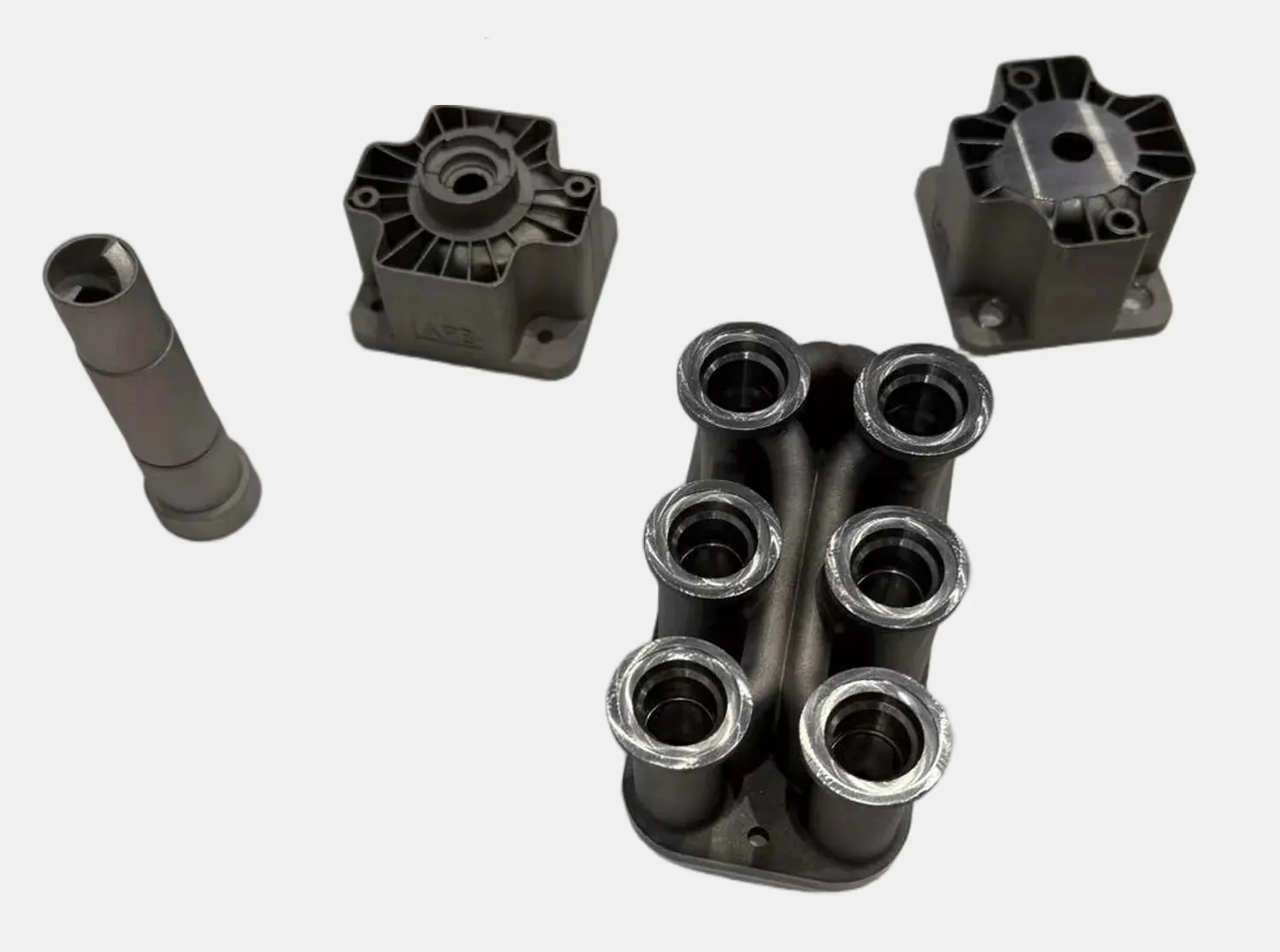
Oxygen sensor seats, EGR valve parts, turbocharger impeller prototyping. 17-4PH and Inconel 718 meet high-temperature and high-strength requirements.
Typical lead time: 4-5 days | Material: 17-4PH/Inconel 718
⌚ Smart Wearables
Watch cases, strap buckles, sensor brackets
Rapid prototyping of smartwatch structural parts; complex surfaces and internal structures formed in one shot. Validation of Ti-6Al-4V lightweight solutions.
Typical lead time: 3-5 days | Material: 316L/Ti-6Al-4V
⚙️ Industrial Automation
Fixtures, gears, valve bodies in small batches
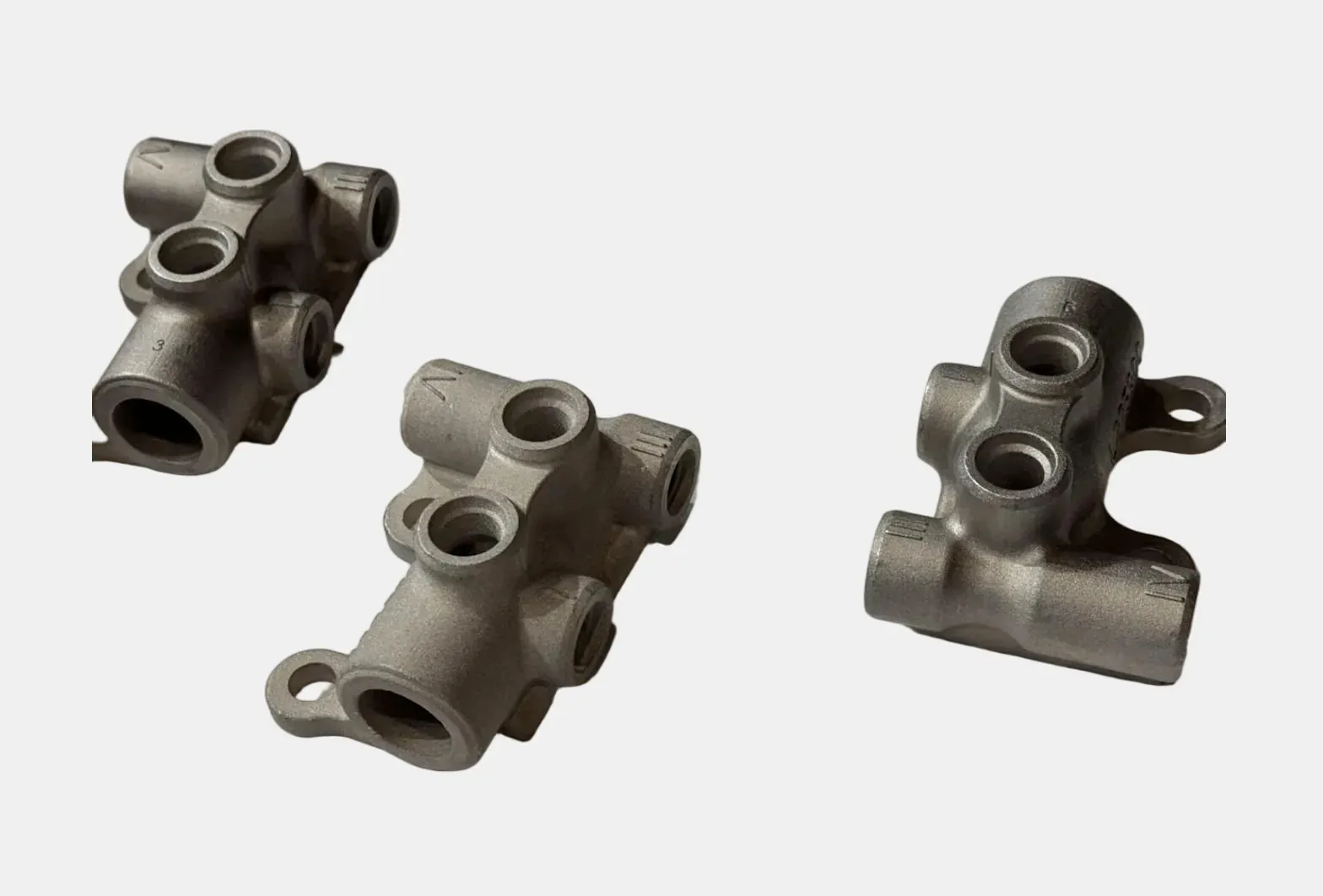
Custom fixtures, non-standard gears, pneumatic valve bodies. MBJ directly produces small batches without tooling or CNC programming, flexibly responding to non-standard needs.
✈️ Aerospace
Lightweight structural parts, sensor housings
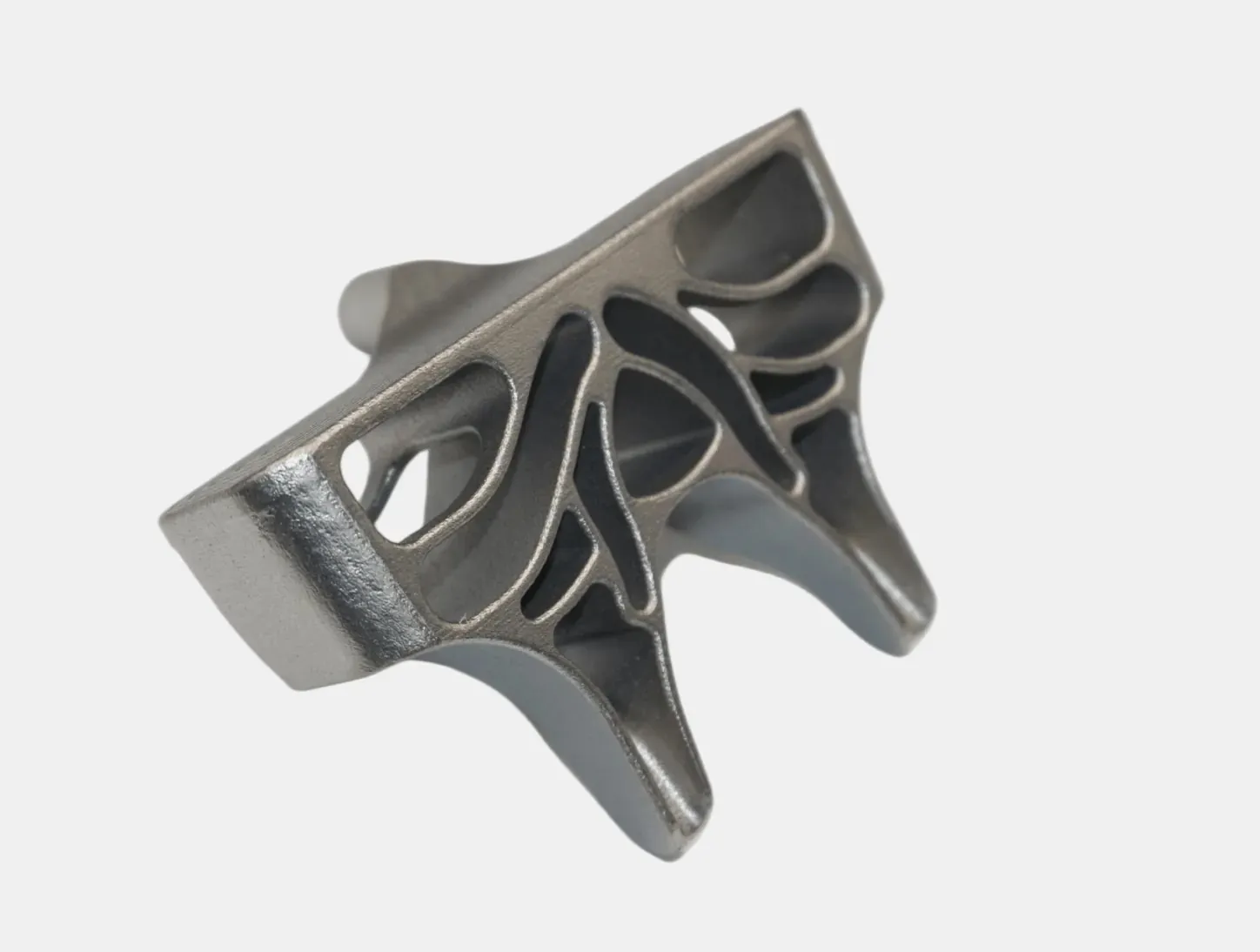
Validation of topologically optimized lattice structures, prototyping of aerospace sensor housings. Ti-6Al-4V and Inconel 718 meet aerospace-grade performance.
Typical lead time: 4-5 days | Material:Ti-6Al-4V/Inconel 718
🔬 Precision Instruments
Opto-mechanical structural parts, magnetic circuit parts
Optical instrument brackets, small batches of Fe-50Ni soft magnetic parts. Complex internal structures do not need to consider demolding, maximizing design freedom.
Typical lead time: 4-5 days | Material:316L/Fe-50Ni
🔫 Security & Defense
Sight mounts, tactical rails, special parts
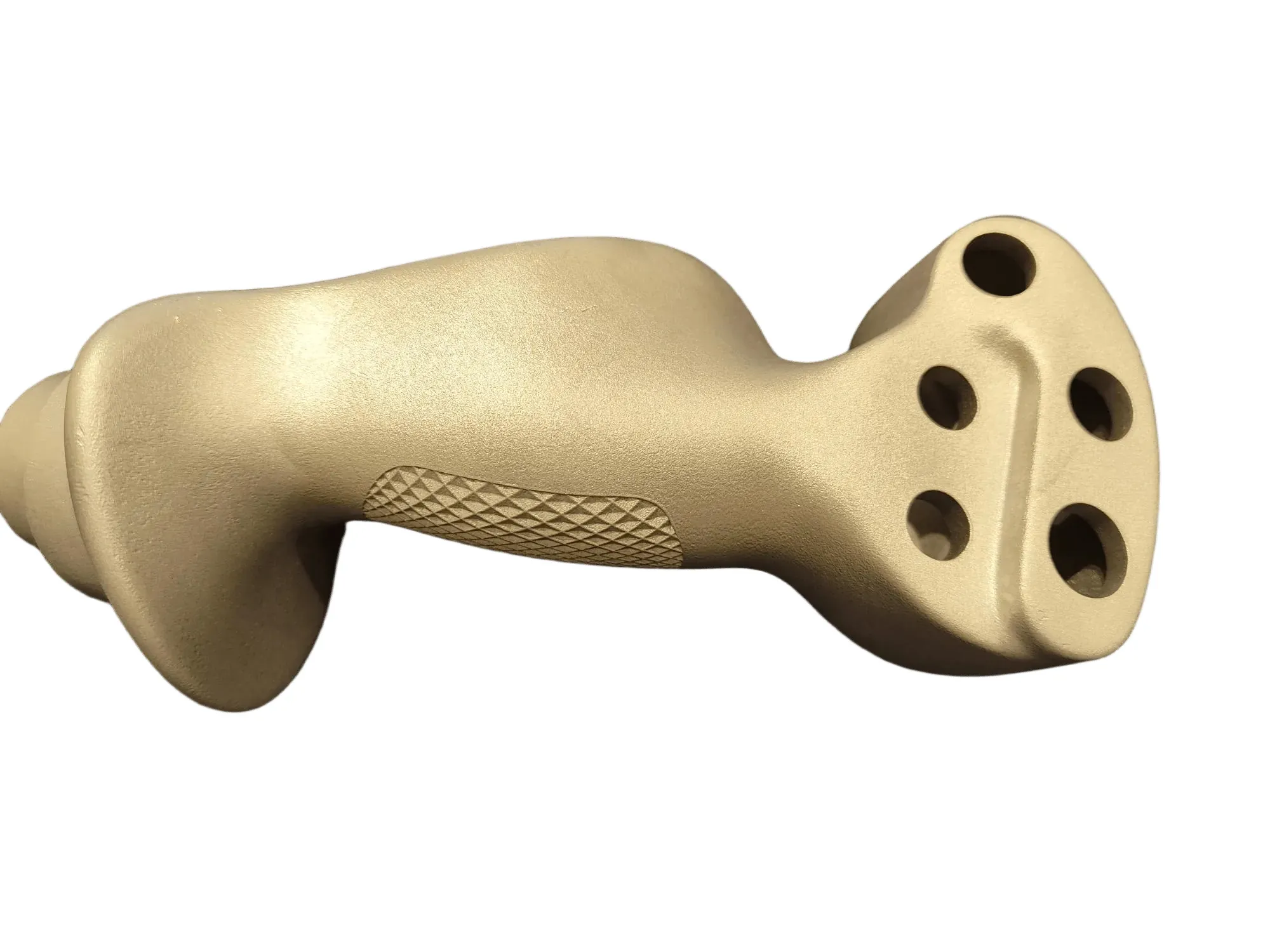
Rapid delivery of high-strength 17-4PH structural parts, meeting demanding environmental test requirements. Flexible production for small batches and multiple varieties.
Typical lead time: 4-5 days | Material:17-4PH/4140
Our MBJ Service — Complete Value Chain from Evaluation to Delivery
Choosing BRM Metal's MBJ service gives you not just printed parts — but a complete one-stop service from material selection, DFM optimization, printing, debinding and sintering, post-processing, to quality inspection.
Overview of Post-Processing Capabilities
| Post-Processing Type | Effect | Applicable Materials | Typical Applications |
|---|---|---|---|
| Mechanical polishing | Ra <0.8μm, mirror finish effect | 316L/304L/17-4PH | Consumer electronics appearance parts, medical devices |
| Sandblasting | Uniform matte finish, removes scale | All materials | Decorative parts, functional parts |
| PVD coating | High hardness (>2000HV), multiple colors available | 316L/17-4PH/Ti | High-end wearables, decorative parts, wear-resistant parts |
| Electroplating (nickel/chrome/gold) | Anti-corrosion + decoration + conductivity | 316L/304L | Electronic connectors, appearance parts |
| Passivation | Significantly improves corrosion resistance | Stainless steel series | Medical devices, chemical parts |
| Heat treatment (solution/aging/annealing) | Optimizes mechanical properties and magnetic properties | 17-4PH/Fe-50Ni | Structural parts, soft magnetic parts |
| CNC finishing | ±0.01mm accuracy | All materials | Critical mating surfaces, sealing surfaces |
| Hot isostatic pressing(HIP) | Density >99%, eliminates internal defects | Ti/Inconel | Aerospace, medical critical parts |
MBJ Frequently Asked Questions
Focused on MIM+MBJ Dual Process precision manufacturing
One-Stop from Prototyping to Mass Production service
Products and Services
Copyright © 1998-2026 Shanghai United Metal Materials Co., Ltd